Automation continues to reshape modern industrial operations. Companies now demand systems that deliver faster production, safer movement, and high-precision material handling. The AGV forklift plays a central role in this transformation because it replaces manual transport with guided, reliable, and predictable movement. Yet, the real value of these automated systems depends on the components that support them. Customized parts now help factories achieve better performance without compromising safety or durability.
Many facilities now integrate custom CO2 cylinders in their processes. These cylinders support specialized tools, automated handling, fire-safety protocols, and environmental control systems. Their presence strengthens the operational quality of automated platforms.
As demand for smart facilities grows, companies now explore ways to align automation with custom-built components that deliver long-term reliability and measurable economic value.
How Does an AGV Forklift Improve Navigation, Precision, and Workflow Stability?
An AGV forklift transforms warehouse operations through advanced positioning and guided movement. The latest laser-guided forklift AGV models use a self-developed navigation and positioning system. This system achieves a high accuracy level of ±10 mm. Such precision reduces stacking errors, protects fragile goods, and supports high-density storage layouts. The forklift follows a predictable path and maintains consistent speed, which strengthens planning.
The AGV forklift replaces manual driving with fully automated navigation. This shift reduces human error during long and repetitive shifts. Each forklift includes systems for laser anti-collision, mechanical collision avoidance, and photoelectric safety responses. Together, these safety layers prevent accidents before they occur. The forklift observes its environment with instant decision-making tools. This stability supports faster movement between production lines and storage areas.
Beyond movement control, the AGV forklift integrates with a scheduling system. This system manages all AGVs operating inside the facility. The software monitors location, battery levels, and task priority. It connects through a wireless network for real-time updates. The scheduling platform also links to MES and WMS platforms. These connections allow factories to synchronize inventory levels, production progress, and material demand.
This combination of navigation accuracy, safety control, and digital scheduling gives companies a strong operational foundation. The AGV forklift works with predictable timing and stable routes. Teams can design production plans without uncertainty. Every material transfer follows a digitally verified process. This helps manufacturers reduce interruptions and reach continuous production goals.
Why Are Custom CO2 Cylinders Essential for Automated and Controlled Environments?
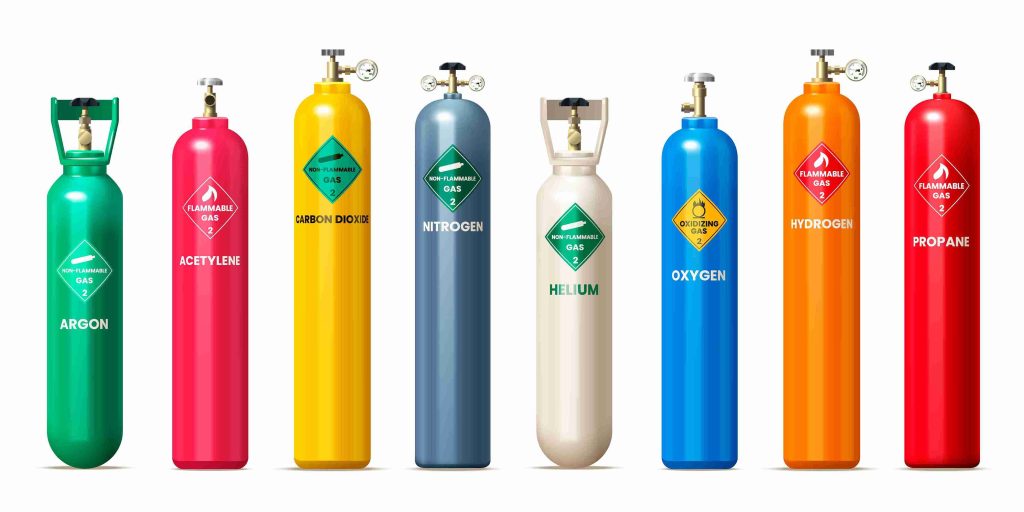
Custom CO2 cylinders now serve many industrial applications. Their primary value appears in tasks that require pressure stability, regulated release, and fire-suppression capability. Custom production allows companies to define size, valve style, pressure range, and gas purity. These choices help factories build efficient support systems for automation.
In automated warehouses, CO2 cylinders often support specialized pneumatic tools. These tools handle packaging steps, labeling tasks, and lightweight mechanical operations. Stable CO2 pressure helps these devices perform reliably. When paired with AGV forklift operations, these cylinders create a controlled environment where machines can complete repetitive tasks without disruption.
Many companies also integrate custom CO2 cylinders into environmental safety systems. These systems include fire-suppressant modules that protect high-density storage areas. Sensors activate CO2 release during emergencies to protect sensitive electronics and inventory. Custom CO2 cylinders ensure the correct discharge rate, ensuring quick response without damage.
Factories with temperature-controlled zones also use CO2 cylinders to regulate conditions. These cylinders support processes that involve cooling or controlled atmospheric conditions. When designed to match system requirements, custom CO2 cylinders reduce waste, maintain consistent operation, and ensure safe pressure control.
How Do AGV Forklifts and Custom CO2 Cylinders Strengthen Modern Industrial Automation Together?
The integration of AGV forklift systems and custom CO2 cylinders creates a more intelligent facility. Their connection improves stability, workflow speed, and emergency readiness. When both components operate together, factories gain an ecosystem where material handling and environmental control support each other.
AGV forklift operations depend on reliable safety systems. Custom CO2 cylinders support these systems in fire-suppression modules. They help protect areas where automated forklifts operate. With correct discharge design, they ensure quick and safe response inside high-density storage zones. This prevents system damage and protects AGV units.
In production areas, AGV forklifts often work near automated machinery that uses CO2-driven pneumatic tools. Custom cylinders supply these tools with consistent pressure. Stable tool function improves coordination between line machinery and AGV movement. Tools perform at the correct speed, and forklifts deliver materials at the right time. This partnership reduces bottlenecks.
The digital scheduling system of AGV forklifts also benefits from stable environmental conditions. Custom CO2 cylinders can support cooling and atmospheric control. This helps protect sensitive sensors and electronics inside the forklifts. Predictable environmental conditions reduce the risk of sensor failure.
Many factories also design custom CO2 cylinders to fit into narrow spaces or mobile platforms. This flexibility helps engineers integrate safety or process systems directly into automated vehicles. When machines and cylinders share compatible design parameters, the result is a clean and efficient system layout.
Together, these innovations create a manufacturing environment where each component supports the other. Automated transport becomes smarter. Support systems become more responsive. The entire facility reaches a higher level of coordination and operational discipline.
What New Opportunities Can Factories Unlock Using Integrated AGV Systems and Custom Components?
Factories gain new strategic advantages when AGV forklift systems and custom CO2 cylinders operate together. One major benefit involves flexible scaling. Companies can add more AGVs without redesigning the entire layout. The scheduling system manages every additional unit. Custom CO2 cylinders can also be produced in new sizes to match expanded zones.
Another benefit appears in predictive maintenance. Sensors inside AGV forklifts track performance data. When paired with regulated environmental conditions supported by CO2 systems, the equipment experiences reduced stress. Predictive insights help maintenance teams plan servicing schedules. This reduces emergency stoppages.
Workforce optimization is another advantage. AGV systems reduce the physical strain on teams. Meanwhile, custom CO2 cylinders ensure safer conditions by supporting fire-safety systems and controlled environments. Teams work more comfortably and safely.
Conclusion:
Modern factories now demand solutions that combine automation with tailored components. The AGV forklift supports this need with precise navigation, built-in safety systems, and advanced scheduling features. Its ±10 mm positioning accuracy helps companies handle materials with confidence. The forklift moves across production lines with stable performance, reduced risk, and predictable timing.
Custom CO2 cylinders also elevate facility performance. Their ability to support pneumatic tools, controlled atmospheres, and responsive fire-safety systems makes them valuable components. When tailored to the equipment environment, they reduce waste, strengthen safety, and ensure stable operation.